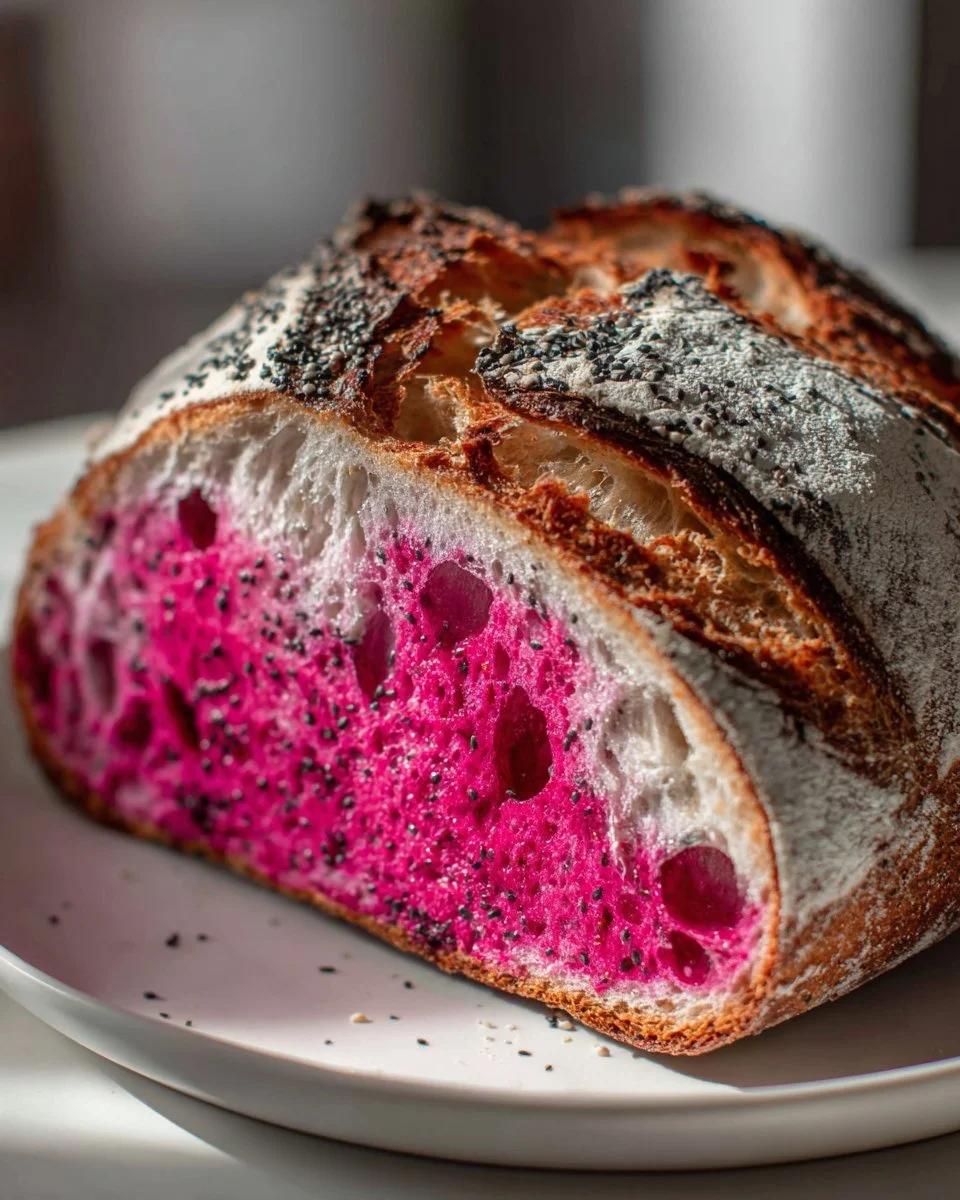
The aroma of freshly baked bread wafts through your kitchen, wrapping you in a warm embrace of carbs and comfort. But this is not just any loaf; this is pink sourdough bread, a masterpiece that tempts the eyes and tantalizes the taste buds. As you slice through the crust, the knife glides effortlessly, revealing a soft inner glow that perfectly complements the vibrant blush of the exterior. Each bite offers a delightful chew, with a hint of tang from the natural fermentation process, and just enough sweetness from the remarkable addition of dragon fruit powder. The taste is a harmonious blend of sweet and savory, enveloping your senses and inviting you to take another piece—after all, who can resist a loaf that’s not just food but a feast for the eyes, too?
Whether it graces your dinner table or acts as the centerpiece for a homemade picnic spread, pink sourdough draws everyone in for a closer look. Friends and family gather around, drawn not just by its striking hue but by the intrigue of flavor and texture. The light, airy crumb interplays with the gentle crust, offering that perfect contrast: a satisfying crunch upon first bite followed by the pillowy softness that lingers. The vibrant color, the engaging aroma, and the harmonious combination of flavors create an experience that is sure to make this bread a beloved staple in your home.
Why You’ll Love This Pink Sourdough Bread
Imagine serving a loaf of pink sourdough at your next gathering or family meal. The enchanting color immediately sparks interest, and as your loved ones dig in, their excitement intensifies with each delicious bite. This bread stands out not only because of its captivating appearance but also due to its incredible taste. Each slice reveals the art of sourdough making: the satisfying tang from the fermentation process combined with the natural sweetness of dragon fruit.
You’ll delight in the many ways you can enjoy this bread. Perfect as a base for decadent sandwiches layered with your favorite meats and cheeses or toasted for a breakfast treat topped with creamy butter and jam, pink sourdough elevates any meal. In addition to its standout flavor profile, crafting this loaf is a delightful process, connecting you with the age-old tradition of bread-making. It offers a sense of accomplishment that goes far beyond the first bite.
Preparation Phase & Tools to Use
Before embarking on your pink sourdough adventure, gather a few essential tools that will make the process smooth and enjoyable:
- Digital Kitchen Scale: Accuracy is key in bread-making. A scale ensures each ingredient is measured precisely for perfect results.
- Mixing Bowls: Use large bowls to give your dough plenty of room to grow and stretch as it ferments and rises.
- Dough Scraper: This handy tool helps you handle sticky dough and keep your workspace clean.
- Banneton Proofing Basket: This helps shape your dough and creates beautiful patterns on the loaf when baked.
- Dutch Oven: Ideal for creating steam during the baking process, allowing your bread to develop a crusty exterior.
Preparation Tips:
- Always feed your sourdough starter the night before; to guarantee it’s at its peak performance by the time you knead.
- Organize your ingredients ahead of time so you can focus on the joy of creating.
Ingredients for Pink Sourdough Bread
- 2 tbsp dragon fruit powder: This vibrant ingredient is not only responsible for the beautiful color but also adds a subtle sweetness to the bread. You can substitute it with beetroot powder for a similar hue and taste.
- 500 grams bread flour: The backbone of your loaf, choose bread flour for its high gluten content, which gives excellent structure to the dough.
- 12 grams salt: Salt enhances flavor and controls the fermentation process, resulting in a well-balanced loaf.
- 350 grams water: Ideally at room temperature, hydrating your flour properly is crucial for achieving the perfect dough consistency.
- 100 grams active sourdough starter: This helps develop enchanting depth in flavor while providing necessary leavening.
How to Make Pink Sourdough Bread
-
Feed your starter: The night before, feed your sourdough starter to ensure it’s active and full of bubbles.
-
Combine the dry ingredients: In a large mixing bowl, whisk together the flour, salt, and dragon fruit powder ensuring even distribution of the color.
-
Prepare the wet ingredients: In a separate bowl, whisk together the warm water and your bubbly active starter.
-
Mix together: Pour the wet mixture into the dry ingredients. Use a spatula to combine until a shaggy ball of dough forms.
-
Rest the dough: Cover the bowl with a damp cloth and let it rest for about 30 minutes, allowing the flour to hydrate.
-
Stretch and fold: With your hands, grab one side of the dough, stretch it up about six inches, and fold it back over. Rotate the bowl a quarter turn and repeat this for all four sides. This process adds strength to the dough.
Tip: Aim for three sets of stretch and folds spaced 20-30 minutes apart during this stage.
-
Bulk fermentation: Cover your dough and let it ferment at room temperature for 5-7 hours or until it has grown by about 50%. When you see bubbles forming on the surface, it’s time to proceed.
-
Shape the dough: Transfer the dough to a floured surface. Fold the edges toward the center and gently spin it to create surface tension.
-
Proof the dough: Place the shaped dough into a banneton and refrigerate for an hour.
-
Preheat your oven: Set it to 425°F, ensuring a hot environment for baking.
-
Cook your loaf: Place your dough on a piece of parchment. Score the top with a sharp razor to allow steam to escape, then carefully place it in the Dutch oven. Bake covered for 25 minutes, then remove the lid for an additional 22-25 minutes or until golden brown.
-
Cool down: Let the bread cool for at least 1-2 hours before slicing—this step is crucial for flavor and crumb development.
Chef’s Notes & Helpful Tips
- Make-ahead tips: You can mix the dough the night before and let it ferment slowly in the refrigerator.
- Cooking alternatives: You can use a conventional oven; the key is to create steam—placing a pan with boiling water inside works wonders.
- Customization ideas: Add herbs, spices, or even nuts and seeds to create your unique twist on this delightful bread.
Common Mistakes to Avoid
- Under-developing the dough: Ensure that you follow the stretching and folding instructions. Insufficient folds can result in dense bread.
- Skipping the resting period: Patience is vital! Allow your dough ample time to ferment.
- Not preheating well enough: Without sufficient heat in the oven, the bread won’t rise correctly, losing that beautiful airy texture.
What to Serve With Pink Sourdough Bread
- Creamy Avocado Toast: The creamy, buttery avocado pairs beautifully with the tang of the sourdough.
- Cheeses and Charcuterie: A board of assorted cheeses and cured meats creates a festive spread that highlights the bread’s flavor.
- Soft Boiled Eggs: Slice the bread and create the perfect platform for a delicious runny egg.
- Hearty Soups: A rich tomato or roasted vegetable soup calls for a slice of this delightful bread for dipping.
- Butter and Jam: The classic combination never disappoints; it’s best served warm for an indulgent breakfast.
- Bruschetta: Top with diced tomatoes and basil for a fresh appetizer.
- Garlic and Herb Butter: Toast slices with a spread of garlic herb butter for a mouthwatering side.
Storage & Reheating Instructions
Store any leftover pink sourdough bread in a paper bag at room temperature for up to three days. For extended freshness, freeze slices wrapped individually in plastic, then in foil for up to three months. To reheat, use a toaster or oven until warmed through, restoring the crust’s delightful crunch.
Estimated Nutrition Information
Each slice contains approximately:
- Calories: 150
- Carbohydrates: 30g
- Protein: 4g
- Fat: 0.5g
- Fiber: 1g
(Disclaimer: Values may vary based on ingredients used and serving sizes.)
FAQs
1. Can I use all-purpose flour instead of bread flour?
Yes, you can, but your bread may lack the chewy texture and rise that bread flour offers. The protein content in bread flour enhances gluten development.
2. What if my bread doesn’t rise?
Ensure your sourdough starter is active and bubbly; if it’s not, the dough won’t ferment properly.
3. Can I add other flavors to the dough?
Absolutely! Feel free to add spices, herbs, or cheese to create your signature loaf.
4. What’s the best way to know when my bread is done baking?
Look for a deep golden-brown crust. You can also tap the bottom of the loaf; if it sounds hollow, it’s ready!
5. How can I tell if my starter is healthy?
A healthy starter should double in volume after feeding within 4-6 hours, have a pleasant tangy smell, and be bubble-filled.
Conclusion
As you take your first bite of homemade pink sourdough, the world outside fades, and all that remains is the joy of baking—the satisfaction of nurturing dough into something magical. This vibrant bread invites you to savor every moment: the process, the aroma, the taste, and the companionship it brings to meals. Whether you’re enjoying it fresh from the oven, gifted to a friend, or shared at a gathering, this pink sourdough bread is destined to create fond memories and delicious moments in your life. So roll up your sleeves and let the adventure of baking begin!
Print
Pink Sourdough Bread
- Prep Time: 15 minutes
- Cook Time: 55 minutes
- Total Time: 70 minutes
- Yield: 1 loaf 1x
- Category: Bread
- Method: Baking
- Cuisine: Baking
- Diet: Vegetarian
Description
A vibrant pink sourdough bread that combines sweet and savory flavors with a captivating appearance, perfect for both meals and gatherings.
Ingredients
- 2 tbsp dragon fruit powder
- 500 grams bread flour
- 12 grams salt
- 350 grams water
- 100 grams active sourdough starter
Instructions
- Feed your starter: The night before, feed your sourdough starter to ensure it’s active and full of bubbles.
- Combine the dry ingredients: In a large mixing bowl, whisk together the flour, salt, and dragon fruit powder ensuring even distribution of the color.
- Prepare the wet ingredients: In a separate bowl, whisk together the warm water and your bubbly active starter.
- Mix together: Pour the wet mixture into the dry ingredients. Use a spatula to combine until a shaggy ball of dough forms.
- Rest the dough: Cover the bowl with a damp cloth and let it rest for about 30 minutes, allowing the flour to hydrate.
- Stretch and fold: With your hands, grab one side of the dough, stretch it up about six inches, and fold it back over. Rotate the bowl a quarter turn and repeat this for all four sides. This process adds strength to the dough.
- Bulk fermentation: Cover your dough and let it ferment at room temperature for 5-7 hours or until it has grown by about 50%. When you see bubbles forming on the surface, it’s time to proceed.
- Shape the dough: Transfer the dough to a floured surface. Fold the edges toward the center and gently spin it to create surface tension.
- Proof the dough: Place the shaped dough into a banneton and refrigerate for an hour.
- Preheat your oven: Set it to 425°F, ensuring a hot environment for baking.
- Cook your loaf: Place your dough on a piece of parchment. Score the top with a sharp razor to allow steam to escape, then carefully place it in the Dutch oven. Bake covered for 25 minutes, then remove the lid for an additional 22-25 minutes or until golden brown.
- Cool down: Let the bread cool for at least 1-2 hours before slicing—this step is crucial for flavor and crumb development.
Notes
Make-ahead tips: You can mix the dough the night before and let it ferment slowly in the refrigerator. Store leftover bread in a paper bag at room temperature for up to three days, or freeze slices for up to three months.
Nutrition
- Serving Size: 1 slice
- Calories: 150
- Sugar: 1g
- Sodium: 500mg
- Fat: 0.5g
- Saturated Fat: 0g
- Unsaturated Fat: 0g
- Trans Fat: 0g
- Carbohydrates: 30g
- Fiber: 1g
- Protein: 4g
- Cholesterol: 0mg