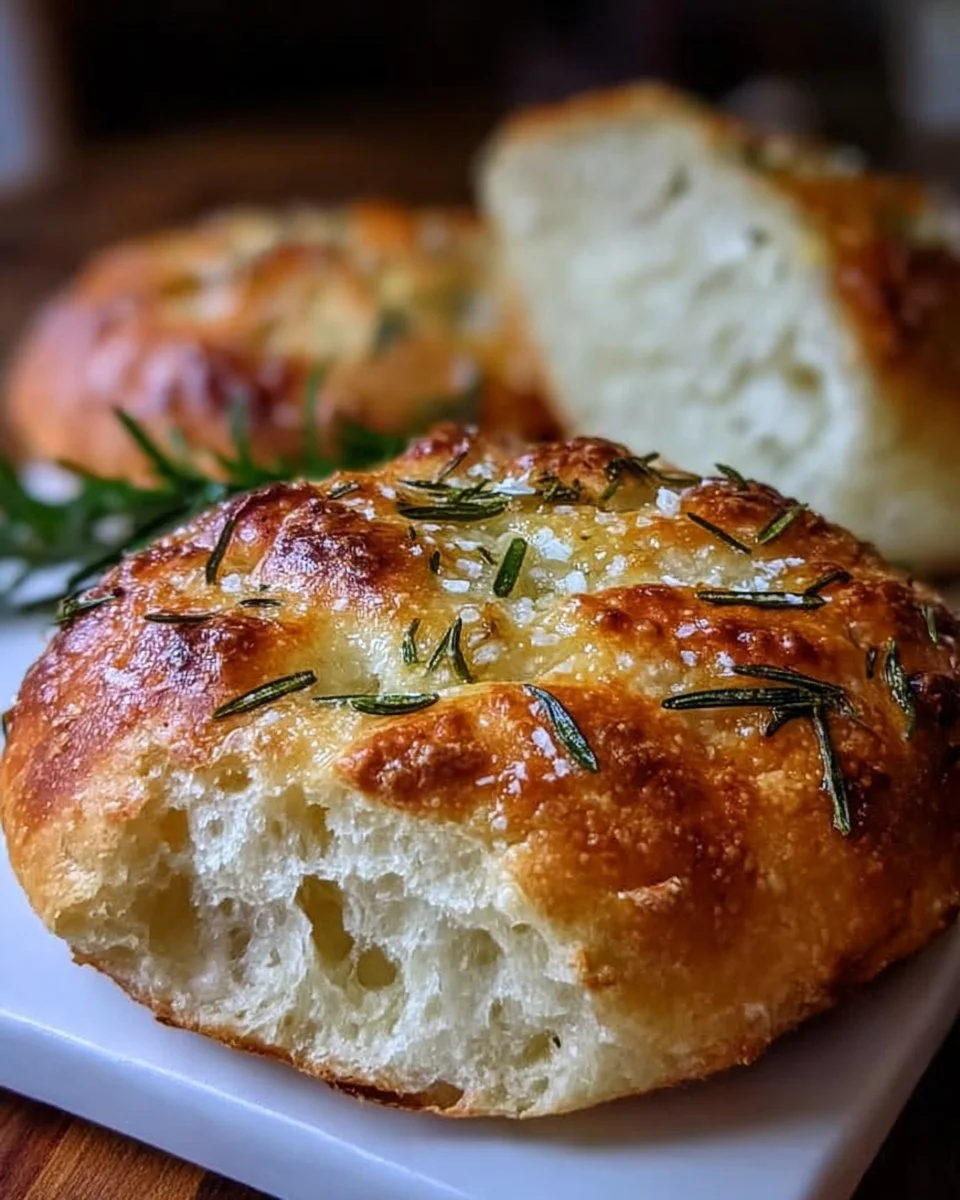
The scent of garlic sizzling in olive oil and the piney perfume of fresh rosemary fill the kitchen as this loaf browns, drawing everyone to the oven like a magnet. Tear into the crust and you’ll find a cloud of tender, pillowy crumb that practically melts on the tongue, flecked with golden bits of roasted garlic and bright green needles of herb. Every bite balances a crisp, caramelized crust with a soft, fragrant interior — comfort and elegance in one loaf.
This bread performs beautifully as both centerpiece and supporting player: it stands up to bold soups, elevates a simple salad, and steals the show alongside roasted meats. It also rewards slow, patient baking — the kind of recipe that fills the home with warmth and makes guests linger. If you want a crowd-pleasing loaf that smells like a restaurant and tastes like home, you’ve found it. For a complete dinner pairing, consider serving this alongside my parmesan-crusted chicken with creamy garlic sauce, which complements the bread’s garlic-rosemary notes beautifully.
Why You’ll Love This Irresistibly Fluffy Garlic Rosemary Bread Recipe
This loaf delivers what every great homemade bread promises: aroma, texture, and soulful flavor. The garlic infuses the dough rather than simply sitting on top, so the savory punch spreads into every crumb. Fresh rosemary adds an herbaceous lift that brightens the rich garlic and olive oil, making each slice taste intentional and sophisticated.
You’ll notice the difference in texture right away. The long rise and proper kneading open the gluten enough to create an airy, tender interior while the high-heat bake forms a blistered, golden crust that snaps satisfyingly when you slice it. This bread shines for weeknight dinners, weekend brunches, holiday spreads, or when you simply want to bake something that fills your home with irresistible smells.
Preparation Phase & Tools to Use
Good tools make good bread. Here’s what I reach for and why:
- Large mixing bowl: Gives the dough room to come together and rise without spilling.
- Measuring cups and spoons: Accurate yeast and salt measures make the difference between a perfect rise and a flat loaf.
- Kitchen scale (optional): Weighing flour yields the most consistent results — 3 1/2 cups can vary by how you scoop.
- Bench scraper: Helps fold and handle the dough on a floured surface without fighting sticky bits.
- Clean towel or plastic wrap: Keeps the dough from forming a crust during rises.
- Baking sheet or pizza stone lined with parchment: A stone delivers better oven spring and crust; a sheet works great for everyday baking.
- Sharp knife or lame: A quick, confident score guides expansion and creates a beautiful loaf pattern.
- Wire rack: Critical for cooling to avoid soggy bottom crust.
Preparation tips:
- Warm water slightly warmer than body temperature (about 100–110°F / 38–43°C) wakes the yeast without killing it. If you don’t have a thermometer, it should feel comfortably warm to your wrist.
- Measure flour using the spoon-and-level method, or even better, use a scale for true consistency.
- Minimize drafts where the dough rises. An oven with just the light on creates a cozy proofing spot.
Ingredients for Irresistibly Fluffy Homemade Garlic Rosemary Bread Recipe
- 1 cup warm water (use slightly warmer than body temperature to activate the yeast)
- 2 1/4 teaspoons active dry yeast (this is the star ingredient that gets your bread rising)
- 3 1/2 cups all-purpose flour (ensure a light and airy texture; feel free to substitute with bread flour)
- 1 teaspoon salt (enhances flavor and strengthens the dough)
- 2 tablespoons olive oil (adds moisture and a slight richness to the bread)
- 4 cloves garlic (minced for robust flavor)
- 2 tablespoons fresh rosemary (chopped for fragrant, herbal touch)
Key ingredient notes and substitutions:
- Yeast: Active dry yeast works perfectly here. If you use instant yeast, reduce the proof time slightly and mix it directly with the dry ingredients.
- Flour: Bread flour gives a chewier crumb and stronger rise because of higher protein. All-purpose keeps things tender and still yields a lovely loaf.
- Olive oil: Use a fruity extra-virgin for pronounced flavor or lighter olive oil if you want the herbs to shine more.
- Garlic: Roasted garlic (swap out raw minced garlic and sauté it gently in olive oil before adding) softens the garlic’s edge and gives a sweeter, deeper flavor.
- Rosemary: Fresh rosemary tastes brighter and more aromatic than dried. If using dried, cut the amount to 2 teaspoons and mix into the dough early so it rehydrates.
How to Make Irresistibly Fluffy Homemade Garlic Rosemary Bread Recipe
-
Activate the yeast:
- In a small bowl, combine 1 cup of warm water with 2 1/4 teaspoons of active dry yeast. Let it rest for about 5 minutes until frothy and inviting.
- Tip: If it doesn’t foam, your yeast might be old or the water too hot/cold. Start again with fresh yeast and check water temperature.
-
Mix the dry ingredients:
- In a large mixing bowl, whisk together 3 1/2 cups of all-purpose flour and 1 teaspoon of salt to evenly distribute the salt and avoid pockets.
-
Combine and form the dough:
- Pour the yeast mixture into the flour, add 2 tablespoons of olive oil, 4 minced garlic cloves, and 2 tablespoons of chopped rosemary. Stir with a wooden spoon until a shaggy dough forms.
- Tip: If the dough feels very dry, add water 1 tablespoon at a time. If it sticks excessively, dust lightly with flour — aim for tacky, not sticky.
-
Knead the dough:
- Transfer the dough onto a floured surface. Knead for about 10 minutes until it becomes smooth and elastic. The dough should bounce back when you press it.
- Tip: Use the push-fold-turn method: push with the heel of your hand, fold, rotate, and repeat. A bench scraper helps keep work tidy.
-
First rise:
- Place the dough in a lightly greased bowl, turning to coat all sides. Cover with a towel or plastic wrap. Allow it to rise in a warm area for about 1 hour, or until it doubles in size and looks fluffy.
- Tip: For deeper flavor, refrigerate the dough for a slow overnight rise; bring it back to room temperature before shaping.
-
Shape:
- Gently punch down the dough to release trapped air. Shape it into a round loaf by folding edges into the center and smoothing the surface with your hands.
- Place the loaf on a baking sheet or pizza stone lined with parchment paper.
-
Second rise:
- Cover the loaf again and let it rise for another 30 minutes while you preheat the oven to 450°F (230°C).
- Tip: A warm oven tip: preheat the oven, then turn it off for 1 minute and use that warm environment for the second proof if your kitchen is cold.
-
Score and bake:
- Using a sharp knife, score the top with a couple of shallow slashes to direct the expansion.
- Bake for 30–35 minutes until the crust turns golden brown and the loaf sounds hollow when tapped on the bottom.
- Tip: For an extra-crisp crust, place a shallow pan with hot water on the lower rack during the first 10 minutes of baking to create steam.
-
Cool:
- Transfer the bread to a wire rack and let it cool for at least 15 minutes before slicing.
- Tip: Resist cutting immediately — cooling sets the crumb and prevents a gummy texture.
Chef’s Notes & Helpful Tips
Make-ahead tips:
- Refrigerate the dough after the first rise for up to 24 hours to develop deeper flavor. Bring it to room temperature and shape before the second rise.
- Freeze fully cooled slices or the whole loaf wrapped tightly for up to 3 months. Thaw at room temperature and reheat to revive the crust.
Cooking alternatives:
- Air fryer: For a small loaf or rolls, bake at 375°F in the air fryer for 15–20 minutes; watch closely to avoid burning.
- Dutch oven: Bake at 450°F in a preheated Dutch oven for 25–30 minutes with the lid on for the first 20 minutes, then uncover to brown.
- Grill: Heat a pizza stone on the grill and bake with the lid closed at medium-high for a smokier flavor.
Customization ideas:
- Add a tablespoon of grated Parmesan to the dough for a cheesy aroma.
- Swap rosemary for thyme or oregano for a different herbal profile.
- Fold in 1/4 cup of olives or sun-dried tomatoes for a rustic, savory twist.
- Brush the top with garlic butter immediately after baking for a glossy, aromatic finish.
Common Mistakes to Avoid
- Using water that’s too hot or too cold: Too hot kills yeast; too cold slows fermentation. Aim for slightly warmer than body temperature.
- Over- or under-kneading: Under-kneaded dough won’t develop structure and will stay dense; over-kneaded dough becomes tight and resists rising. Knead until smooth and elastic.
- Adding too much flour: It’s tempting to keep adding flour to reduce stickiness, but too much yields brick-like bread. Tackle stickiness with a lightly floured surface and a bench scraper instead.
- Skipping the second rise: That second rest helps relax the dough and improves oven spring. Don’t rush it.
- Cutting the loaf too soon: The crumb needs time to set. Slicing warm locks in steam and produces a gummy texture.
- Not scoring: Without a proper score, the loaf may burst unpredictably and ruin the crust pattern.
What to Serve With Irresistibly Fluffy Homemade Garlic Rosemary Bread Recipe
- Olive oil and balsamic vinegar: A classic, simple dipping pairing that lets the bread’s flavor shine.
- Hearty soups (tomato-basil, roasted butternut, minestrone): The bread soaks up rich broths and adds satisfying texture.
- Roasted or grilled vegetables: The herb notes in the bread pair beautifully with caramelized eggplant, zucchini, and peppers.
- Soft cheeses (Burrata, goat cheese, brie): Creamy cheeses contrast the bread’s crisp crust and amplify the garlic’s warmth.
- Pastas with olive oil–based sauces: Toss the bread with pasta sauces or use it to mop up the last spoonfuls.
- Charcuterie board: Add this loaf alongside cured meats, olives, and fruit for a rustic board.
- Stews and braises: Use the bread to sop up concentrated pan juices and sauces.
- Salads with vinaigrette: The bread adds a satisfying heft when paired with light, bright salads.
Storage & Reheating Instructions
- Room temperature: Store the loaf in a paper bag or loosely wrapped in a kitchen towel for up to 2 days to keep the crust lively while preventing sogginess.
- Refrigerator: Refrigeration dries bread and dulls flavor; if you must, wrap tightly and consume within 5 days.
- Freezer: Slice the cooled loaf, place parchment between slices, wrap tightly in plastic and foil, and freeze for up to 3 months. Toast or oven-reheat directly from frozen.
- Reheating:
- Oven: Preheat to 350°F (175°C). Wrap the loaf or slices in foil and heat for 10–15 minutes (20–25 if frozen) until warm.
- Toaster oven: Toast slices at medium until the crust crisps and the interior warms.
- Microwave (short-term): Wrap a slice in a damp paper towel and microwave in 15–20 second bursts; finish in toaster or oven to restore crispness.
Estimated Nutrition Information
Approximate per slice (assuming 12 slices per loaf):
- Calories: 150–170 kcal
- Carbohydrates: 28 g
- Protein: 4–5 g
- Fat: 2–4 g
- Fiber: 1–2 g
Nutrition varies by exact ingredients, portion sizes, and substitutions. These values serve as an estimate; adjust based on your specific brands and serving sizes.
FAQs
Q: How do I know if my yeast is still good?
A: Proof yeast by mixing it with warm water and a pinch of sugar. It should foam and smell yeasty within 5–10 minutes. If it fails to bubble, replace it — expired or improperly stored yeast won’t reliably ferment dough.
Q: Can I use instant yeast instead of active dry yeast?
A: Yes. Instant yeast mixes with dry ingredients and often reduces rise times slightly. Use the same amount and skip the separate activation step, though a quick proof won’t hurt.
Q: My loaf turned out dense — what went wrong?
A: Dense bread often results from under-proofing, under-kneading, or adding too much flour. Ensure the dough doubles during the first rise, knead until elastic, and measure flour accurately.
Q: Can I add roasted garlic instead of raw minced garlic?
A: Absolutely. Roasted garlic gives a sweeter, milder profile. Sauté the minced raw garlic lightly if you want a milder raw flavor, or fold in roasted cloves for depth.
Q: How do I get a crisp crust every time?
A: Bake on a preheated stone or heavy baking sheet and introduce steam for the first 10 minutes (a pan of hot water or spritzing the oven with water). Let the bread cool on a rack to let moisture escape and the crust set.
Q: Will this recipe work as rolls instead of a loaf?
A: Yes. Divide the dough into 8–12 equal pieces, shape into rolls, and reduce the second rise to 20–30 minutes. Bake at 400°F for 12–18 minutes, depending on size.
Q: Can I make this vegan or dairy-free?
A: The recipe already contains no dairy, so it suits a vegan pantry as written. Use olive oil as indicated and avoid brushing with butter if you want a fully vegan finish.
Conclusion
This garlic-rosemary loaf offers a simple, satisfying way to bring bakery-caliber bread into your home. It pairs beautifully with dinner, brightens a casual snack, and rewards the baker with intoxicating aromas and a tender crumb. Try the variations and techniques above to make the recipe your own — then sit back and savor that first warm slice.
If you love the garlic and rosemary pairing and want to explore another texture and style, also try Homemade Easy Focaccia Recipe (Garlic Rosemary).
Print
Irresistibly Fluffy Garlic Rosemary Bread
- Prep Time: 15 minutes
- Cook Time: 35 minutes
- Total Time: 50 minutes
- Yield: 12 slices 1x
- Category: Side Dish
- Method: Baking
- Cuisine: Italian
- Diet: Vegetarian
Description
A crowd-pleasing garlic rosemary bread with a crisp crust and tender interior, perfect for any meal.
Ingredients
- 1 cup warm water
- 2 1/4 teaspoons active dry yeast
- 3 1/2 cups all-purpose flour
- 1 teaspoon salt
- 2 tablespoons olive oil
- 4 cloves garlic, minced
- 2 tablespoons fresh rosemary, chopped
Instructions
- Combine 1 cup of warm water with 2 1/4 teaspoons of active dry yeast in a small bowl; let it rest for about 5 minutes until frothy.
- Whisk together 3 1/2 cups of all-purpose flour and 1 teaspoon of salt in a large mixing bowl.
- Pour the yeast mixture into the flour, add 2 tablespoons of olive oil, 4 minced garlic cloves, and 2 tablespoons of chopped rosemary; stir until a shaggy dough forms.
- Knead the dough on a floured surface for about 10 minutes until smooth and elastic.
- Place the dough in a lightly greased bowl, cover, and let it rise in a warm area for about 1 hour, until it doubles in size.
- Punch down the dough, shape it into a round loaf, and place it on a baking sheet lined with parchment paper.
- Cover the loaf and let it rise for another 30 minutes while preheating the oven to 450°F (230°C).
- Score the top of the loaf with shallow slashes and bake for 30–35 minutes until golden brown.
- Transfer the bread to a wire rack and let it cool for at least 15 minutes before slicing.
Notes
For extra flavor, refrigerate the dough after the first rise for up to 24 hours. This bread pairs well with soups, salads, and main dishes.
Nutrition
- Serving Size: 1 slice
- Calories: 160
- Sugar: 0g
- Sodium: 200mg
- Fat: 2g
- Saturated Fat: 0g
- Unsaturated Fat: 2g
- Trans Fat: 0g
- Carbohydrates: 28g
- Fiber: 1g
- Protein: 4g
- Cholesterol: 0mg