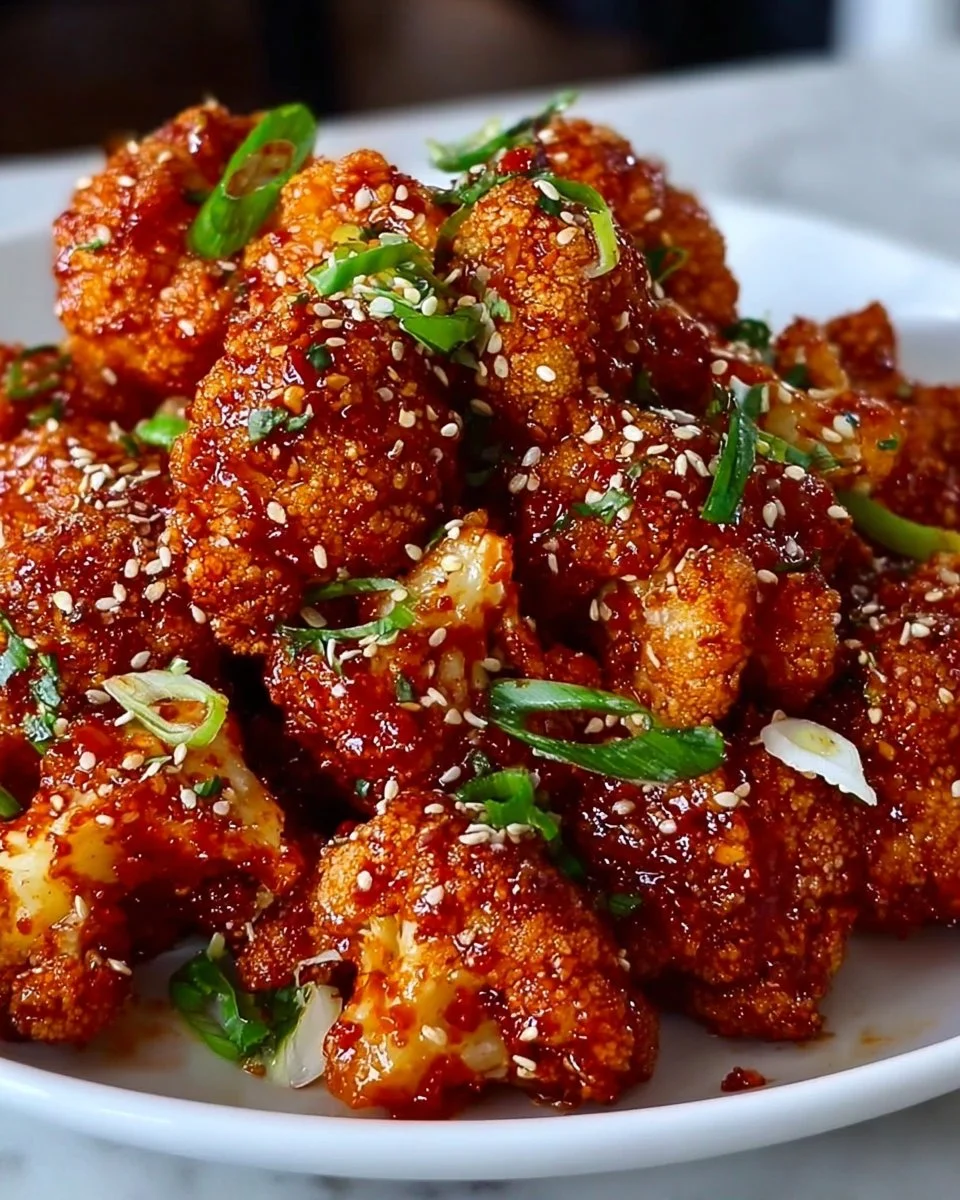
The first bite sings: a loud, satisfying crack of golden crust gives way to a tender, almost creamy cauliflower heart, and a molten ribbon of spicy-sweet gochujang coats every nook and ridge. Steam rises, carrying toasted sesame and a bright, chile-sweet perfume that wakes your appetite. This is comfort food with attitude—vegetable-forward, utterly snackable, and impossible to ignore.
I love recipes that feel like a celebration on the plate: hot, crisp morsels piled high, sticky sauce that gleams, and the kind of texture contrast that keeps you reaching for one more. If you like crunchy coatings and bold sauces, you might also enjoy the crunchy, saucy satisfaction of a Cajun chicken sandwich with crispy garlic aioli—a different protein, same crunchy spirit. This Korean Crispy Spicy Cauliflower recipe marries a light, breadcrumbed fry with a gochujang glaze that’s smoky, sweet, and slyly fiery. Serve it as an appetizer, a weeknight showstopper, or the centerpiece of a plant-based feast.
Why You’ll Love This Korean Crispy Spicy Cauliflower
This recipe hits so many delicious notes at once. The coating turns irresistible: thin, crackly, and holding sauce without going soggy. Inside, cauliflower softens to a pleasant yielding bite—never mushy—so the contrast of textures feels indulgent rather than heavy. The gochujang-based sauce delivers layers of umami, honeyed sweetness, and chili heat that linger without overwhelming. You get brightness from sesame oil and salt, and a silky sheen that makes every floret shine.
It stands out because it transforms humble cauliflower into something festival-worthy. Vegetarians and meat-eaters both find it satisfying; kids love the crunch, adults love the complexity. Make it for game day, family dinners, date-night nibbles, or whenever you want something shareable, bold, and memorable.
Preparation Phase & Tools to Use
A few smart tools make this recipe effortless and give you the best texture.
- Heavy skillet or deep frying pan: Choose one with thick walls that holds temperature; this helps the oil stay hot so the crust crisps rather than soaks up oil.
- Tongs or a slotted spoon: For gentle flipping and fast oil drainage.
- Wire rack and baking sheet: Drain fried cauliflower on a wire rack set on a sheet pan to keep pieces crisp rather than steaming on paper towels.
- Mixing bowls: One for batter, one for breadcrumbs, and a small bowl for the sauce—organization speeds everything up.
- Instant-read thermometer (optional): If you want precision, aim for oil around 350–365°F (175–185°C).
- Whisk and measuring cups/spoons: For even batter and accurate sauce balance.
Practical preparation tips:
- Cut florets into similar sizes so they cook evenly.
- Pat florets dry with a towel after washing; moisture fights crisping.
- Set up an assembly line: batter bowl, breadcrumb bowl, and a tray to hold coated florets so you can fry continuously.
Ingredients for Korean Crispy Spicy Cauliflower
- 1 head of cauliflower, cut into florets
- 1 cup all-purpose flour
- 1 cup water
- 1 cup breadcrumbs
- 1/2 cup gochujang (Korean chili paste)
- 2 tablespoons soy sauce
- 1 tablespoon maple syrup or honey
- 1 tablespoon sesame oil
- Salt and pepper to taste
- Oil for frying
Key ingredient notes and substitutions:
- Cauliflower: Choose a firm head with tight florets. Broccoli works as a substitute but cooks faster; reduce fry time.
- All-purpose flour + water batter: Creates a light, adhesive coating. For a gluten-free option, use a rice flour or chickpea flour batter.
- Breadcrumbs: Panko yields the crispiest result; use plain or seasoned depending on flavor preference. For gluten-free, use gluten-free panko or crushed rice crackers.
- Gochujang: This fermented paste gives depth and caramelized heat. If you don’t have it, use a combo of chili paste (sambal oelek) and a spoon of miso for umami, but the flavor shifts.
- Soy sauce: For gluten-free, use tamari or coconut aminos.
- Maple syrup or honey: Balances heat; use agave for vegan sweetness.
- Sesame oil: Adds toasted aroma—don’t skip it in the sauce.
How to Make Korean Crispy Spicy Cauliflower
- Prepare the cauliflower: Rinse and cut the cauliflower into bite-sized florets. Pat completely dry—damp florets cause the batter to slip and the oil to spit.
- Make the batter: In a large bowl, whisk together 1 cup all-purpose flour, 1 cup water, and a pinch of salt and pepper until smooth. The batter should be pourable but cling to a spoon; adjust with a splash more water or a tablespoon more flour if needed.
- Tip: Let the batter rest for 5 minutes; it helps hydrate the flour and improves adhesion.
- Breadcrumb station: Place breadcrumbs in a shallow bowl. Have a tray ready for coated florets. Dip each cauliflower floret into the batter, allowing excess to drip off, then roll it in breadcrumbs until thoroughly coated. Press gently to help the crumbs adhere.
- Tip: Work in batches so the coated pieces don’t mound and sog.
- Heat the oil: Pour oil into a heavy skillet to a depth of about 1/2–3/4 inch. Heat over medium-high until a deep-fry thermometer reads 350–365°F (175–185°C) or until a small breadcrumb sizzles and rises steadily when dropped in.
- Tip: Keep the oil temperature steady; if it gets too cool, crusts absorb oil and become greasy.
- Fry the cauliflower: Fry the florets in batches, taking care not to overcrowd the pan. Cook about 3–5 minutes per batch, turning occasionally, until golden brown and crisp. Use tongs or a slotted spoon to transfer them to a wire rack set over a baking sheet to drain. Sprinkle lightly with salt while hot.
- Tip: Maintain oil temperature by adjusting the heat between batches; add no more than a few pieces at once.
- Make the sauce: In a small bowl, whisk together 1/2 cup gochujang, 2 tablespoons soy sauce, 1 tablespoon maple syrup (or honey), and 1 tablespoon sesame oil until smooth. Taste and adjust—add a squeeze of lime or a dash of rice vinegar if you want extra brightness.
- Tip: If the sauce is too thick to coat evenly, thin it with a teaspoon or two of warm water.
- Toss and serve: Place warm fried cauliflower in a large bowl, pour the sauce over, and toss quickly until every floret gleams. Serve immediately so the coating stays crisp and the sauce is glossy.
- Tip: Garnish with toasted sesame seeds, thinly sliced scallions, or cilantro for fragrance and color.
Chef’s Notes & Helpful Tips
Make-ahead tips:
- You can prepare the batter and sauce up to a day ahead; refrigerate in airtight containers. Recoat and fry just before serving.
- Par-fry method: Fry the florets until very pale, drain, cool, and freeze on a sheet tray. When ready to serve, fry again to golden—this produces an ultra-crisp finish and allows easy make-ahead for parties.
Cooking alternatives:
- Air fryer: Preheat to 400°F (200°C). Lightly spray coated florets with oil and air-fry in a single layer for 10–12 minutes, shaking once, until golden and crisp.
- Oven-baked: Arrange coated florets on a parchment-lined sheet, spray with oil, and roast at 425°F (220°C) for 20–25 minutes, flipping halfway. Texture will be crisp but less delicate than frying.
- Shallow pan-fry: Works well if you don’t have deep oil; use enough oil to come halfway up the florets and turn frequently.
Customization ideas:
- Add garlic powder, smoked paprika, or ground ginger to the breadcrumb mix for extra flavor.
- Make it sticky-sweet: stir in 1–2 tablespoons of brown sugar into the sauce for a caramelized edge.
- Add crunch and freshness: top with crushed peanuts or pickled radishes for contrast.
- Turn into tacos or sliders: pile sauced cauliflower into tortillas with slaw and pickled cucumbers.
Common Mistakes to Avoid
- Overcrowding the pan: Crowding drops the oil temperature and causes soggy, oily coating. Fry in small batches for consistent crispness.
- Skipping the drying step: Wet cauliflower leads to batter slipping off and greasy results. Pat florets dry before battering.
- Using low-temperature oil: Oil that’s not hot enough makes the crust absorb oil. Aim for 350–365°F and monitor between batches.
- Applying sauce too early: Tossing in sauce and letting sit will soften the crust. Serve immediately after saucing or keep sauce on the side for dipping.
- Sauce imbalance: Too much sweetener can swamp gochujang’s complexity; taste and adjust little by little.
What to Serve With Korean Crispy Spicy Cauliflower
- Steamed jasmine rice or sticky rice — simple, neutral base that soaks up sauce.
- Pickled cucumbers or quick kimchi — cut through richness with acid and crunch.
- Sesame-sesame slaw — shredded cabbage tossed with rice vinegar and sesame seeds adds freshness.
- Cold noodle salad (soba or somen) — light, tangy, and cooling beside the spicy florets.
- Lettuce wraps — use butter lettuce to make hands-on bites with herbs and rice.
- Crispy fries or sweet potato wedges — for a party platter that satisfies every craving.
- Scallion pancakes — another crisp Korean-inspired accompaniment with savory depth.
- Light beer or sparkling tea — carbonation refreshes the palate between spicy bites.
Storage & Reheating Instructions
Fridge:
- Store leftovers in an airtight container for up to 3 days. Keep the sauce separate if possible to preserve crispness.
Freezer:
- For best results, freeze par-fried (pale-golden) florets on a tray until solid, then transfer to a freezer bag for up to 1 month. Re-fry from frozen to finish.
Reheating:
- Oven or toaster oven: Preheat to 400°F (200°C). Arrange on a wire rack over a baking sheet and reheat 8–12 minutes until crisp. This restores the exterior crunch nicely.
- Air fryer: Reheat at 360–380°F (180–190°C) for 4–6 minutes, checking for desired crispness.
- Avoid microwaving: It makes the coating soggy and offers an uneven texture. If you must, microwave briefly and then crisp in an oven or air fryer.
Estimated Nutrition Information
Approximate per serving (assuming 4 servings):
- Calories: 320–420 kcal
- Fat: 18–25 g (varies with frying oil amount)
- Carbohydrates: thirty-five–50 g
- Protein: 6–8 g
- Fiber: 4–6 g
- Sodium: 500–800 mg
Disclaimer: These values are rough estimates and vary based on portion size, oil absorption, ingredient brands, and whether you use substitutions (air fryer/oven methods reduce fat). Use a nutrition calculator for precise tracking.
FAQs
Q: Can I make this entirely vegan?
A: Yes. Use maple syrup or agave instead of honey and check that your breadcrumbs are vegan (many are). The recipe as written uses plant-based ingredients otherwise—just avoid honey if strictly vegan.
Q: How can I get the crispiest possible coating?
A: Three keys: pat the florets dry, keep oil temperature steady, and drain on a wire rack (not paper towels). Using panko breadcrumbs and frying in small batches also maximizes crunch. For a pro trick, double-fry: fry briefly until pale, let rest, then fry again until deeply golden.
Q: Is gochujang very spicy? How can I control the heat?
A: Gochujang is spicy but also sweet and savory; its heat is moderate and builds. To reduce spice, use less gochujang and add more maple syrup, a splash of tomato paste, or a mild chili paste. To increase heat, add a little chile oil or cayenne.
Q: Can I bake this for a lower-fat version?
A: Yes. Coat and arrange on a sheet, spray with oil, and roast at high heat (425°F/220°C) until golden, flipping once. Expect slightly less crispness than frying but still delicious—air fryer works best for a closer match.
Q: How far ahead can I prep?
A: You can cut and dry cauliflower and make the batter and sauce a day ahead. For parties, par-fry and freeze on a tray; finish frying or reheat freshly before saucing. Avoid fully saucing until serving for the best texture.
Q: What breadcrumb type should I use?
A: Panko gives the lightest, crunchiest crust. Regular breadcrumbs work and give a denser coating. For a gluten-free version, try crushed rice crackers, cornflakes, or certified gluten-free panko.
Conclusion
If you want a dish that looks like a guilty pleasure but leaves you energized and satisfied, Korean Crispy Spicy Cauliflower delivers: a crunchy, saucy, aromatic plate that becomes the star of any table. The balance of textures and the bold gochujang glaze make it addictive and surprisingly versatile—easy to scale for snacks, dinners, or party platters. For a different take on Korean-style fried cauliflower and more inspiration, check out this Korean Fried Cauliflower recipe on CJ Eats and then come back to try your own twists. Give this one a try tonight—get the oil hot, gather friends, and savor the satisfying crack of perfectly fried cauliflower.
Print
Korean Crispy Spicy Cauliflower
- Prep Time: 15 minutes
- Cook Time: 20 minutes
- Total Time: 35 minutes
- Yield: 4 servings 1x
- Category: Appetizer
- Method: Frying
- Cuisine: Korean
- Diet: Vegetarian
Description
A crunchy and flavorful appetizer featuring cauliflower coated in a spicy gochujang sauce.
Ingredients
- 1 head of cauliflower, cut into florets
- 1 cup all-purpose flour
- 1 cup water
- 1 cup breadcrumbs
- 1/2 cup gochujang (Korean chili paste)
- 2 tablespoons soy sauce
- 1 tablespoon maple syrup or honey
- 1 tablespoon sesame oil
- Salt and pepper to taste
- Oil for frying
Instructions
- Prepare the cauliflower: Rinse and cut the cauliflower into bite-sized florets. Pat completely dry.
- Make the batter: In a large bowl, whisk together the flour, water, and a pinch of salt and pepper until smooth. Let it rest for 5 minutes.
- Set up breadcrumbs in a shallow bowl and prepare a tray for the coated florets. Dip each floret in the batter, then roll in breadcrumbs.
- Heat the oil in a heavy skillet to a depth of about 1/2–3/4 inch. Aim for a temperature of 350–365°F (175–185°C).
- Fry the cauliflower in batches, cooking for about 3–5 minutes until golden brown and crisp. Drain on a wire rack.
- Make the sauce by whisking the gochujang, soy sauce, maple syrup, and sesame oil in a small bowl.
- Toss the fried cauliflower in the sauce until coated and serve immediately.
Notes
Maintain oil temperature for the best frying results. Serve with garnishes like sesame seeds or scallions.
Nutrition
- Serving Size: 1 serving
- Calories: 350
- Sugar: 8g
- Sodium: 600mg
- Fat: 20g
- Saturated Fat: 3g
- Unsaturated Fat: 15g
- Trans Fat: 0g
- Carbohydrates: 45g
- Fiber: 5g
- Protein: 10g
- Cholesterol: 0mg